Finding activities that work for seniors with dementia is one of the hardest parts of caregiving. The activity has to be simple enough to be accessible, engaging enough to hold attention, and calm enough not to cause frustration. Most activities tick one of those boxes. Very few tick all three.
Coloring is one of the exceptions and there is a growing body of research explaining exactly why.
This guide covers what the science says about coloring for seniors with dementia, why the group format matters, how to run a successful session, and what type of coloring materials hold attention the longest.
Why Coloring Works for Seniors with Dementia
Dementia affects memory and executive function, but it tends to spare procedural memory — the memory for how to do familiar physical tasks — longer than other cognitive functions. Coloring is a procedural activity. The motion of picking up a marker and applying color to a page is deeply familiar to most adults, even those with significant cognitive decline.
Research published in the journal Art Therapy and studies from occupational therapy programs consistently identify coloring as beneficial for dementia patients for several reasons:
- Reduces agitation. The repetitive motion of coloring activates the parasympathetic nervous system, producing a measurable calming effect. Studies show reduced behavioral symptoms including pacing, calling out, and resistance to care during and after coloring sessions.
- Improves focus. Coloring gives a concrete, visible task with a clear outcome. For seniors who struggle with open-ended activities, having a defined space to color provides structure without pressure.
- Stimulates sensory engagement. Color selection, the feel of a marker or crayon, and the visual progress of a filling page all activate multiple sensory pathways simultaneously.
- Preserves dignity. Coloring produces a finished piece that looks beautiful regardless of the person's cognitive state. There's no wrong way to color, which means there's no failure — only contribution.
- Encourages social interaction. When done in a group, coloring creates natural conversation starters: "I love that blue you used," "look at this corner," "shall we do the flowers next?" These low-stakes exchanges are often the most connected moments in a dementia care day.
Why Giant Posters Work Better Than Coloring Books for This Population
Standard coloring books present challenges for seniors with dementia that are easy to overlook until you're in the room with them.
Small pages require fine motor precision that declines with age and dementia progression. Turning pages adds a task that can be confusing or frustrating. Individual books create an isolated experience — each person working alone — which reduces the social benefit.
A giant coloring poster solves all three problems at once.
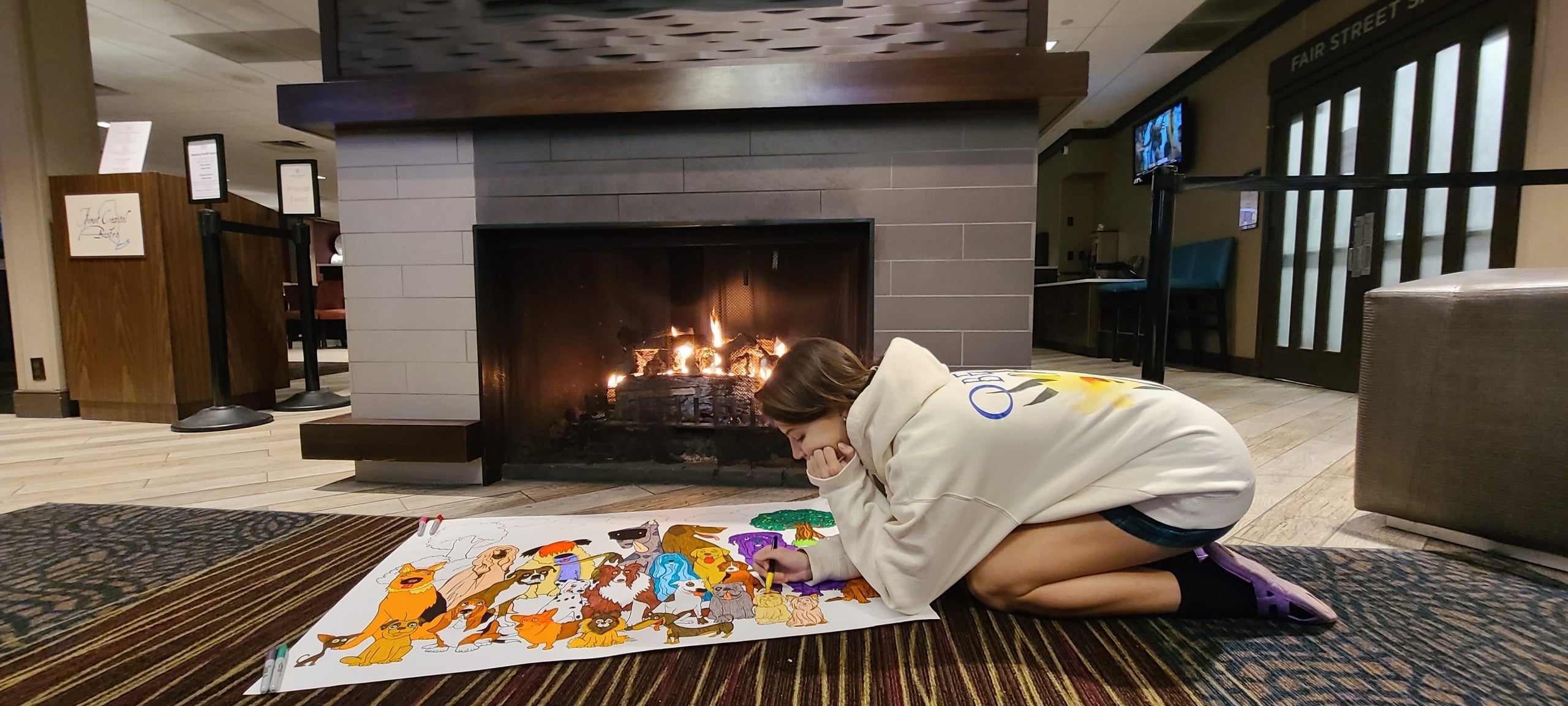
At 30x42 inches, a single poster gives a table of six to ten people a shared canvas with large, clearly defined coloring sections. No page-turning. No fine motor precision required — broad strokes work perfectly. And because everyone is coloring the same image, the activity is naturally communal. Residents who haven't spoken in hours will comment on what a neighbor is doing.
Activity directors at senior centers consistently report that giant posters produce longer engagement times and more spontaneous social interaction than any other tabletop activity they run.
Shop Giant Coloring Posters for Senior Programs →
How to Run a Coloring Session for Seniors with Dementia
Setup matters as much as the activity itself. Here's what works:
Before the Session
- Choose a time when residents are typically most alert — for most facilities, mid-morning between 10am and noon is the sweet spot.
- Tape the poster to a table rather than leaving it loose. A flat, stable surface prevents the paper from moving and reduces frustration.
- Pre-select 8 to 12 markers or crayons in bright, distinct colors. Too many choices is overwhelming; too few becomes restrictive.
- Make sure there's enough seating for everyone to reach the poster comfortably without stretching.
During the Session
- Start by pointing to a large, simple section and saying "let's start here." Give residents a clear entry point rather than an open-ended "go ahead."
- Narrate what's happening: "Look at that purple — that's beautiful." "This section is really coming alive." Simple affirmations keep engagement going without adding cognitive pressure.
- Don't correct color choices. A blue sun is a perfect blue sun.
- Keep sessions between 20 and 40 minutes. Watch for signs of fatigue — decreased engagement, restlessness, or looking away — and wrap up before frustration sets in.
After the Session

- Display the finished poster in a common area at eye level. Point it out to residents over the following days: "You helped make that."
- Take a photo of the group with their finished poster. This becomes a powerful reminiscence tool in future sessions.
Choosing the Right Poster Design for Dementia Programs
Not every design works equally well for seniors with dementia. Here's what to look for:
| Design Feature | Why It Matters |
|---|---|
| Large, clearly defined sections | Easier to color without fine motor precision |
| Bold outlines | Clear boundaries reduce confusion about where to color |
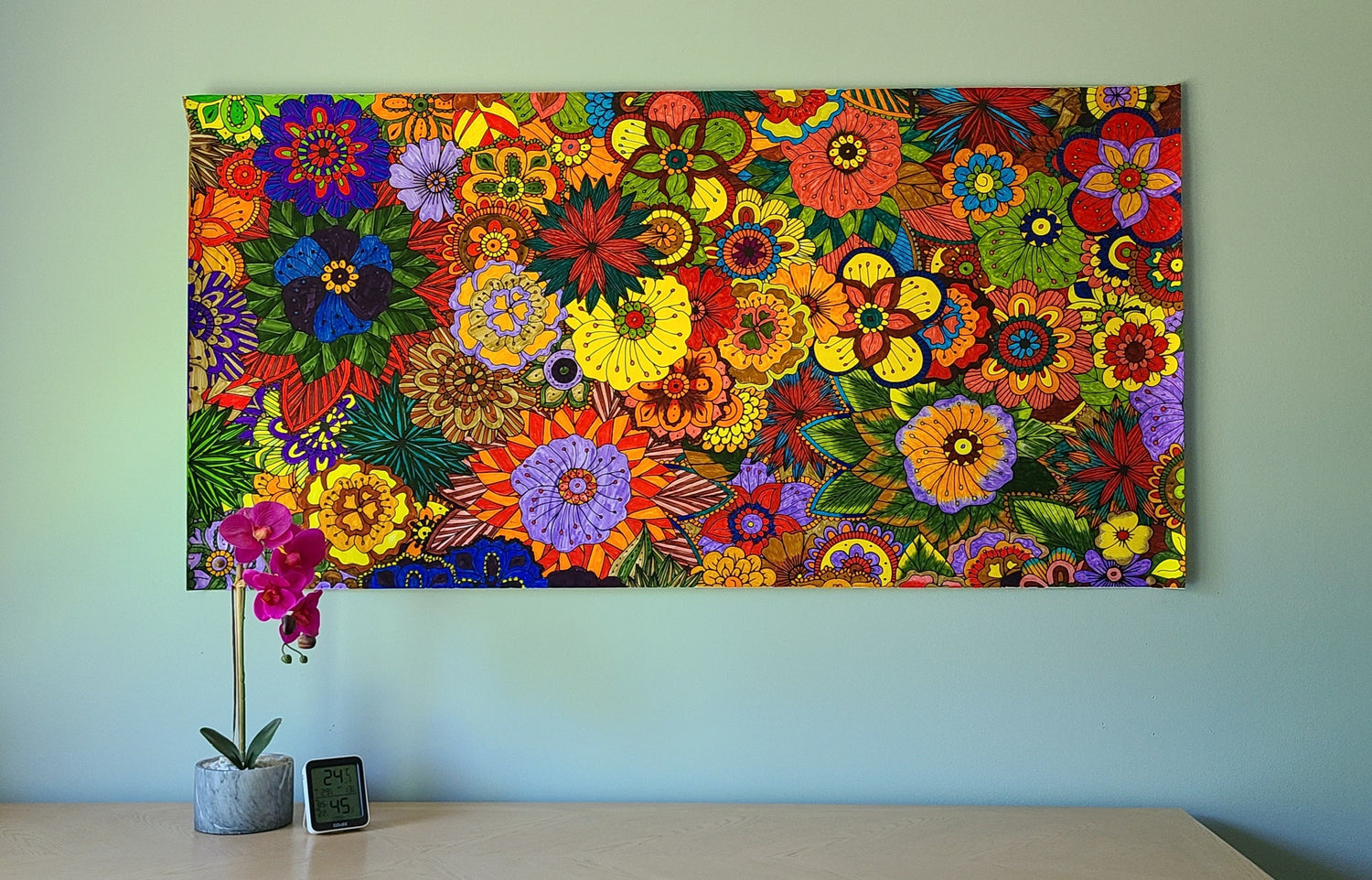
| Familiar, recognizable imagery | Flowers, animals, and nature scenes trigger positive memories |
| Symmetrical patterns | Repeating elements give residents multiple entry points |
| Avoid: very small details | Intricate areas cause frustration when they can't be colored neatly |
SJPrinter's giant coloring posters are printed at 30x42 inches with bold outlines and large coloring sections — specifically the kind of design that works best for group coloring in care settings.
Browse All Giant Coloring Poster Designs →
Managing Common Challenges
Short attention spans: Keep the poster visible between sessions so residents can add to it over several days rather than completing it in one sitting. The ongoing project creates continuity and gives residents something to look forward to.
Limited mobility: Position wheelchair users at corners of the poster where they have the most reach. The large format means even limited range of motion covers significant ground.
Refusal to participate: Don't push. Seat a reluctant resident near the group without pressure to join. Watching others color is often enough to produce the calming effect — and participation often follows naturally within a few minutes.
Residents who color over each other's sections: This is fine. There's no rule about who colors where. Redirect gently if needed, but treat shared overlapping as collaboration rather than error.
What Caregivers and Activity Directors Say
Activity directors who use giant coloring posters in dementia care programs report a consistent pattern: the first session takes effort to set up, and by the second or third session, residents are asking when the next one is.
One activity director described a resident with moderate dementia who rarely engaged in group activities. During the first coloring session, she colored silently for twenty minutes — the longest she had participated in any group activity in months. By the third session, she was directing other residents on which colors to use.
That kind of sustained, social engagement is what every dementia care program is working toward. Coloring doesn't cure anything. But it opens a door that a lot of other activities can't.
How Many Posters Do You Need?
For a typical activity program running coloring sessions weekly:
- Small group (6–8 residents): One poster per session. A 2-poster bundle gives you two weeks of material.
- Medium group (10–15 residents): One large poster handles this well. Order a 3-poster bundle for a month of programming.
- Large facility or multiple units: Order in bulk — packs of 10 or more are available for care facilities running multiple groups.
All SJPrinter posters are printed in the USA and ship flat so nothing arrives bent or damaged. Free shipping on orders over $50.
Shop the 2-Poster Bundle — $50 with Free Shipping →
Shop the 3-Poster Bundle — $64.99 →
The Bottom Line
Coloring activities for seniors with dementia work because they meet people where they are — drawing on preserved procedural memory, removing the pressure of right and wrong answers, and creating a shared experience that produces genuine social connection.
The format matters. Giant posters beat individual coloring books in care settings almost every time: larger scale, shared canvas, no page-turning, no fine motor demands, and a finished piece that goes on the wall as a visible record of what the group accomplished together.
If you're an activity director, caregiver, or family member looking for something that reliably works — this is a strong place to start.

Leave a comment
All comments are moderated before being published.
This site is protected by hCaptcha and the hCaptcha Privacy Policy and Terms of Service apply.