
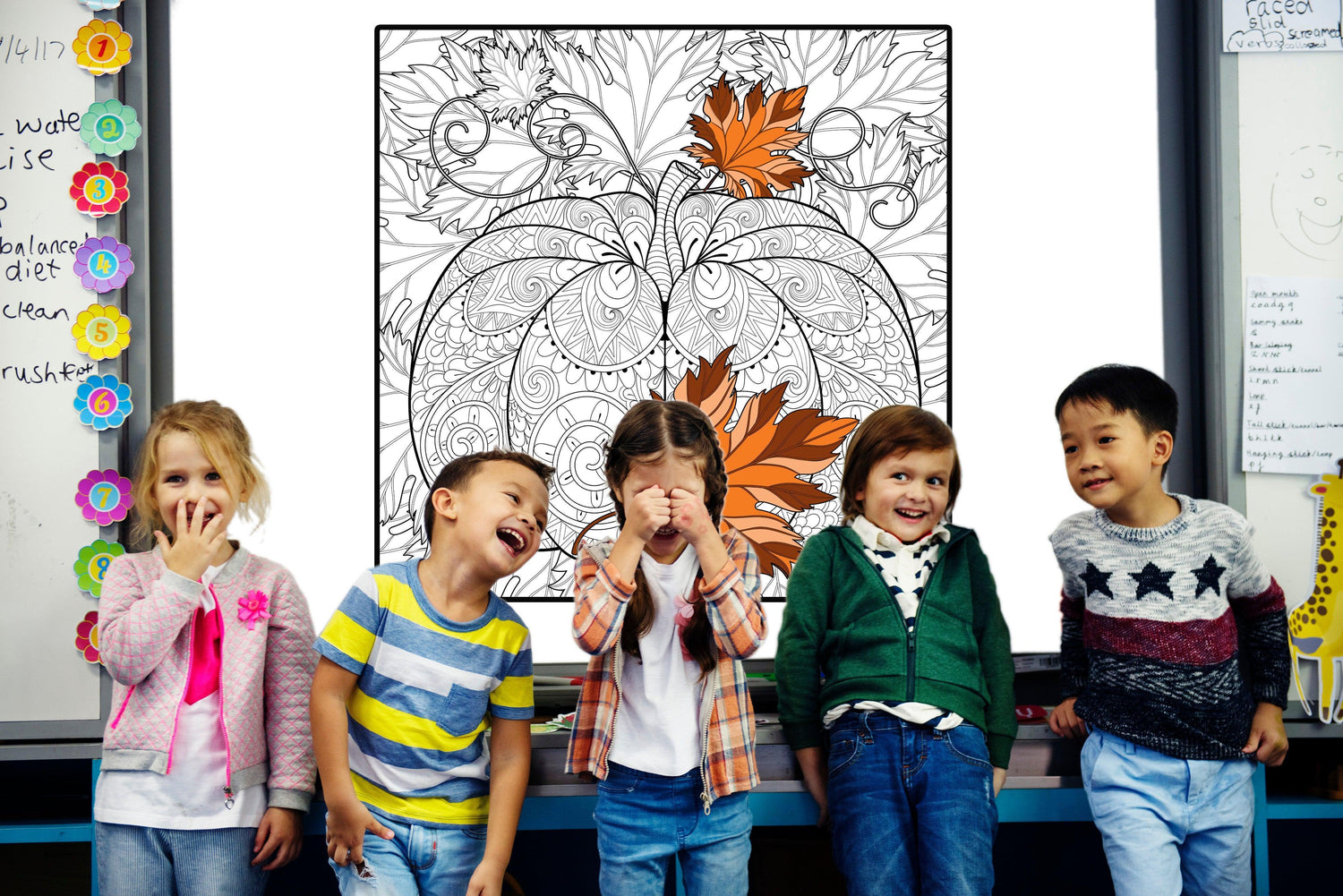
Sensory-friendly Halloween for kids with autism usually starts falling apart weeks before October 31 — most often at the costume fitting, when something about the fabric, the collar, or the mask is wrong and the whole holiday suddenly feels like too much.
Halloween stacks more sensory triggers into a single night than almost any other holiday. Flashing lights. Sound-activated decorations. Doorbells going off every few minutes. Crowds. Smells. Scratchy costumes. And on top of all of it, social performance — knocking on strangers' doors, saying something on cue, navigating a neighborhood full of unpredictable noise and movement.
For a child with sensory processing differences, that's not a fun night. It's a gauntlet.
This post covers what the specific triggers are, what autism specialists recommend, and which activities give kids with autism a real Halloween experience without the parts that overwhelm them — including some that work well at home with no costume required.
Why Halloween Hits Differently for Kids with Autism
Most kids experience Halloween as exciting. For kids with autism, the same things that make it exciting for other children are exactly the problem.
Early Autism Services identifies the primary triggers: bright and flashing lights from decorations, sound-activated decorations and doorbells ringing repeatedly, scratchy or unfamiliar costume fabrics, crowds, and the social expectations of trick-or-treating — knocking on doors, saying "trick-or-treat" on demand, joining large groups of kids moving through unfamiliar neighborhoods.
The challenge isn't any one of those things in isolation. It's that Halloween layers all of them at once, with no predictable endpoint. A child who can handle one sensory trigger at a time often can't handle six of them happening simultaneously for two hours.
Sound-activated skeleton at the neighbor's porch. Doorbell. Crowd of kids in costumes. Candy smell mixing with cold air. "Say trick-or-treat." Flashing strobe light three houses down. It compounds fast.
The Costume Problem Is Its Own Category
Costumes deserve a separate section because they're where most Halloween plans end before they begin.
Autism Parenting Magazine recommends three approaches for kids who struggle with costume fabrics:
- Store-bought sensory-friendly costumes made from soft, breathable fabrics without tags — some retailers now specifically label these
- Homemade costumes sewn from fabrics your child already tolerates — if they wear soft cotton every day, a costume made from soft cotton has a chance
- Repurposed everyday clothes — a favorite hoodie becomes a monster, a windbreaker becomes a racer or a coach, a comfortable sweatsuit becomes anything with a paper mask they can hold rather than wear
The priority is fabric your child already wears without issue — not the most recognizable character. If the costume causes a meltdown in the driveway, the night is over before it starts. Test the full costume at least a week before Halloween so you have time to find something else.
Preparing a Child with Autism for Halloween Night
The unpredictability of Halloween is often the hardest part — not just the sensory input, but not knowing what comes next. Early Autism Services recommends using a visual schedule showing each step of the evening in order: putting on the costume, leaving the house, walking to the first house, knocking, saying trick-or-treat, getting candy, walking to the next house, and coming home.
Walk through it before the night. Practice trick-or-treating at home — have a family member give out candy from a different room. It sounds low-stakes, but giving a child on the spectrum the chance to rehearse a sequence before it happens in a noisy, crowded environment makes a real difference.
Other things that help: noise-canceling headphones (bring them, let the child decide whether to use them), choosing quieter neighborhoods with less foot traffic, identifying a "done" signal in advance so the child knows the night has a defined endpoint, and having a backup plan ready if trick-or-treating doesn't work.
Sensory-Friendly Halloween Activities That Actually Work
If trick-or-treating is not the right option — or if it goes sideways — having alternatives that still feel like Halloween matters. A child who doesn't make it around the block doesn't have to lose the whole holiday.
Home-based trick-or-treating. Set up different rooms in the house where family members give out candy or small toys. The child knocks, says trick-or-treat (or doesn't), and gets something. No crowds, no cold, no unpredictable neighbors — and the structure of actually trick-or-treating, just inside a space they know.
Halloween sensory bin. Fill a bin with Halloween-themed safe objects — small soft pumpkins, plastic spiders, fabric bats, kinetic sand in orange or black. No loud components. Predictable textures. A child can spend 30 minutes in a sensory bin without any of the triggers that make outdoor Halloween overwhelming.
Pumpkin decorating. Painting rather than carving — no knife, no stringy pumpkin innards for texture-sensitive kids. Stickers work too. The result is something to keep and point to, which matters for children who do better with concrete finished outcomes.
Halloween coloring. This is the activity that transfers most directly from what occupational therapists already use. Coloring provides structured, predictable sensory input — the feel of a marker on paper, a defined task, a visible result. No noise. No smell triggers. No costume. A Halloween-themed coloring poster turns a standard OT-approved activity into a full Halloween experience at home.
Why Giant Coloring Posters Work for Halloween at Home

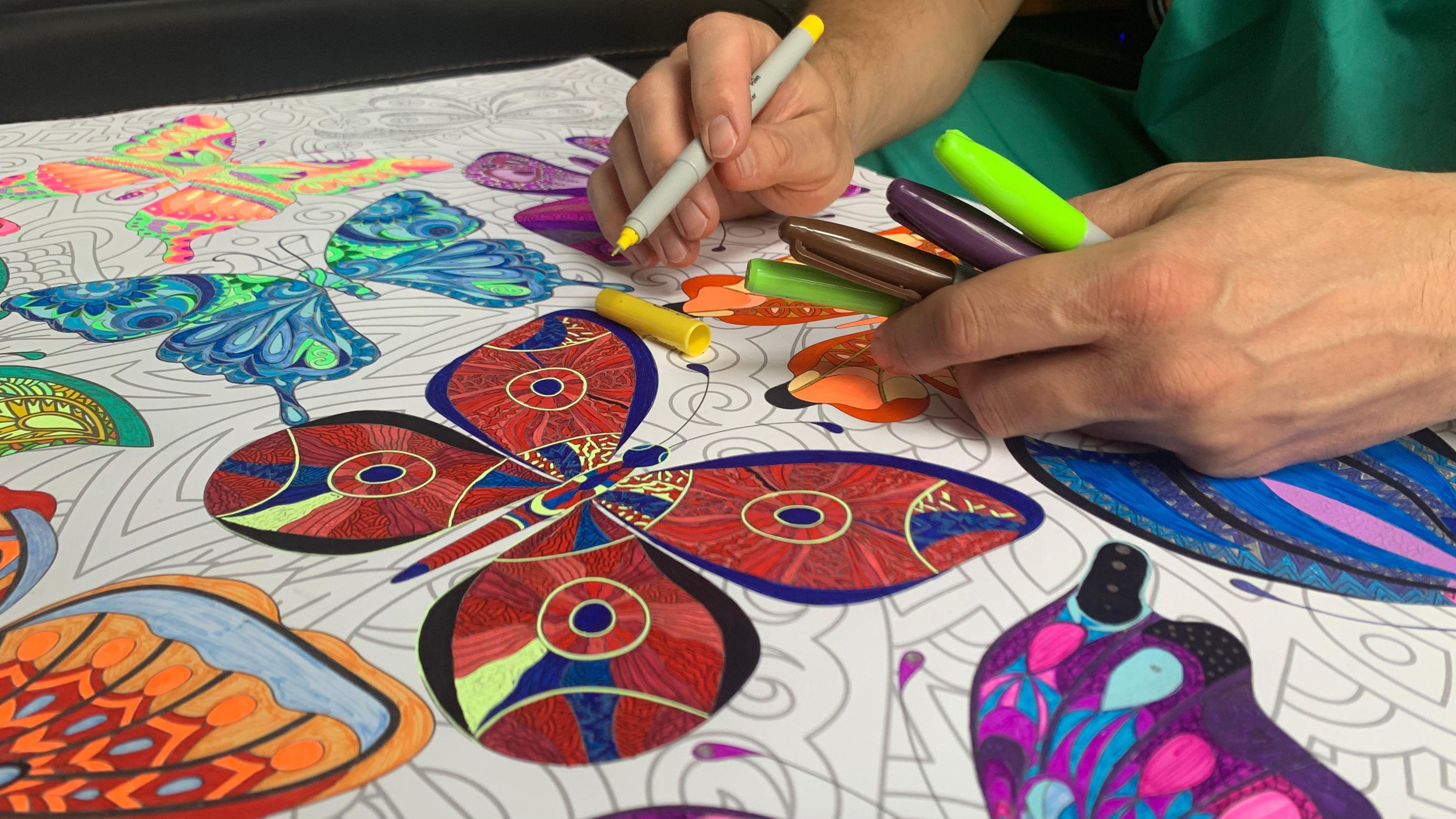
A coloring session at home. No costume required. No noise. Something to show for it at the end. Featured: Hot air balloon giant coloring poster 30"×42" by SJPrinter — finished and on the wall.
A standard coloring page is a solo activity. A giant coloring poster — 24×36 or 30×42 inches — becomes something the whole family does together.
Siblings, parents, and a child with autism all coloring different sections of the same Halloween poster removes the individual performance pressure. Nobody's work is being compared. Nobody has to finish their section for the result to look right. A child who can handle five minutes of coloring before they need a break has contributed to the same poster as a sibling who colored for forty-five minutes. The poster goes on the wall. Both sections are on it.
For kids with autism who struggle with Halloween's unpredictability, there is something specifically useful about a giant coloring poster: it has defined edges, defined sections, a clear task, and a visible endpoint. The sensory input — marker on paper, proprioceptive feedback from pressing — is the same kind of regulated input that occupational therapists use in treatment. (If your child's OT already uses coloring, see our breakdown of what coloring develops in kids with autism and how to run a session at home.)
Halloween designs — pumpkins, spiders, bats, fall leaves, haunted houses — make it a Halloween activity. The format makes it a calm one.
Giant Halloween coloring posters by SJPrinter print on heavy paper stock that handles markers and brush pens without bleed-through. All orders ship same business day from Cherry Hill, NJ — daily UPS pickups, out within hours. Orders shipped outside New Jersey have zero sales tax. South Jersey families can pick up at 1400 Berlin Road, Cherry Hill, NJ 08003, ready within one hour.
A Note on Markers for Sensory-Sensitive Kids
Tool selection matters more here than in a typical coloring session. Cheap alcohol-based markers have a strong chemical smell that is a significant trigger for children with smell sensitivity — and many kids with autism are smell-sensitive. Keep them out of the room entirely.
Washable broad-tipped markers are the safest choice: low odor, easy cleanup, no anxiety about mistakes. Brush pens work well for kids with weaker grip strength. Colored pencils give the most control over pressure — useful for kids who press very hard or very lightly and are working on regulating that.
Frequently Asked Questions — Sensory-Friendly Halloween for Kids with Autism
- Why is Halloween difficult for kids with autism?
- Halloween stacks multiple sensory triggers at once: scratchy costumes, flashing decorations, sound-activated props, doorbells ringing repeatedly, crowds, and social demands. Any single one can be manageable. All of them together for two hours in an unpredictable environment is a different experience.
- What is a sensory-friendly Halloween activity?
- Predictable sensory input, no costume required, no crowd pressure. Options autism specialists recommend: Halloween sensory bins, home-based trick-or-treating, Halloween coloring, and community sensory-friendly events with reduced lighting and fewer people. Giant Halloween coloring posters let kids participate in the holiday at home with none of the outdoor triggers.
- How do I prepare a child with autism for Halloween?
- Use a visual schedule showing each step of the evening. Practice trick-or-treating at home first. Test the costume well before the night. Bring noise-canceling headphones and let the child decide whether to use them. Identify a clear endpoint. Have a backup plan ready if the outdoor version doesn't work.
- Can a child with autism skip trick-or-treating and still have Halloween?
- Yes. Trick-or-treating is one version of Halloween. A home candy hunt, a sensory bin, a Halloween coloring session, or a family pumpkin-decorating night is also Halloween. A child who participates in a calm, themed activity at home is having a Halloween experience — it doesn't have to look like the neighborhood version.
- Why does coloring work as a sensory-friendly Halloween activity?
- Coloring is already used by occupational therapists as a fine motor and sensory regulation activity for kids with autism. It provides consistent, predictable sensory input — no surprise noise, no smell triggers, no social performance. A Halloween-themed design makes it seasonal. The giant format makes it a family activity rather than a solo one.
- What costumes work for texture-sensitive kids?
- Autism specialists recommend soft breathable fabrics without tags, homemade costumes from fabrics the child already tolerates, or repurposed everyday clothes styled as a costume. A favorite hoodie or sweatsuit they already wear comfortably has a much better chance than any store costume with an itchy collar or synthetic fabric. Test it at least a week before Halloween night.
- Are there sensory-friendly Halloween events near me?
- Many communities, schools, and therapy centers host trunk-or-treats and indoor Halloween events with reduced lighting, no costume requirement, and volunteers familiar with autism. In South Jersey, check local therapy practices and school districts for October events.
Related Posts
- → Coloring Activities for Kids with Autism: What Occupational Therapists Use Them For
- → Giant Coloring Poster for Kids: The Halloween Party Activity That Replaces Everything Else
- → Sensory Activities for Adults with Autism and ADHD: Why Coloring Works
- → Giant Coloring Posters for Group Therapy: The Healing Activity That Brings People Together
Giant Halloween Coloring Posters — Ready for Pickup in One Hour
Printed on heavy paper stock at SJPrinter in Cherry Hill, NJ. Same business day UPS shipping. Zero sales tax outside New Jersey. Local pickup at 1400 Haddonfield-Berlin Rd, Cherry Hill, NJ 08003.
856-429-0715 | info@sjprinter.com
Shop Halloween Coloring Posters → Bulk & Custom OrdersGet new posts from SJPrinter
Practical print guides for South Jersey families and teachers. No spam.
Did this help? Let us know.
Leave a comment
All comments are moderated before being published.
This site is protected by hCaptcha and the hCaptcha Privacy Policy and Terms of Service apply.