
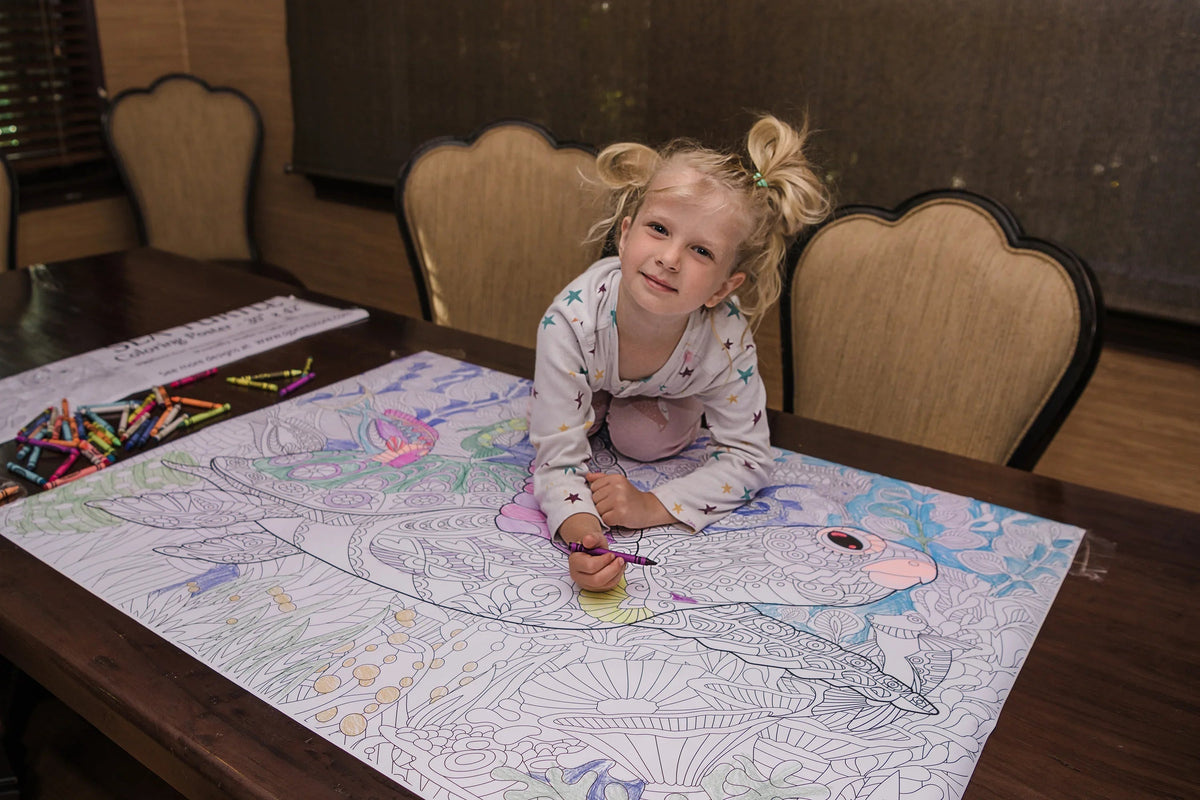
You've seen the sensory bins. The kinetic sand. The slime kits that end up ground into the carpet.
Sensory play is everywhere right now. Pinterest searches are up over 1,000% year over year, and every parenting blog, OT clinic, and school newsletter seems to have a list of sensory activities your kid absolutely needs to try.
Here's the one that's quietly been on occupational therapists' recommended lists for years and somehow never makes the trending roundups:
Coloring.
Not because it's basic. Because it works and the sensory science behind it is more interesting than most parents realize.
What "Sensory Activity" Actually Means
A sensory activity isn't just anything that feels interesting. Occupational therapists define it as an activity that provides meaningful input to one or more sensory systems in a way that supports regulation, focus, and development.
The sensory systems being talked about aren't just touch and taste. They include:
- Tactile — what something feels like in your hands
- Visual — processing what you see
- Proprioceptive — awareness of your body and how much pressure you're applying
- Vestibular — balance and movement
A truly effective sensory activity engages multiple systems at once. Coloring hits tactile, visual, and proprioceptive input simultaneously which is why OTs have used it in therapy settings for decades, long before the adult coloring book trend made it mainstream.
What's Happening in Your Kid's Body When They Color
When a child picks up a marker and starts coloring, here's what's actually going on:
Fine motor control is being exercised. Gripping a marker, controlling pressure, staying within lines (or not) — all of this builds the hand strength and precision that transfers directly to writing, cutting, and self-care tasks. OTs prescribe coloring specifically for kids working on fine motor delays.
The visual system is being trained. Tracking lines, choosing colors, noticing which sections are filled and which aren't — coloring requires sustained visual attention that builds the same skills needed for reading and math.
The proprioceptive system is getting input. The pressure a child applies to a crayon or marker provides calming proprioceptive feedback — the same input that makes weighted blankets effective for sensory-sensitive kids. This is why coloring tends to calm rather than excite.
The nervous system is regulating. The rhythmic, repetitive nature of coloring activates the parasympathetic nervous system — the part responsible for calm and focus. This is the mechanism behind why coloring reduces anxiety in both kids and adults.
Why Giant Posters Do This Better Than Coloring Books

Standard coloring books are fine. But they limit the sensory experience in ways that matter more than most parents notice.
Small pages require micro-level precision that can be frustrating for younger kids or those with fine motor challenges. The confined space limits the proprioceptive input — smaller strokes mean less pressure feedback through the hand and arm.
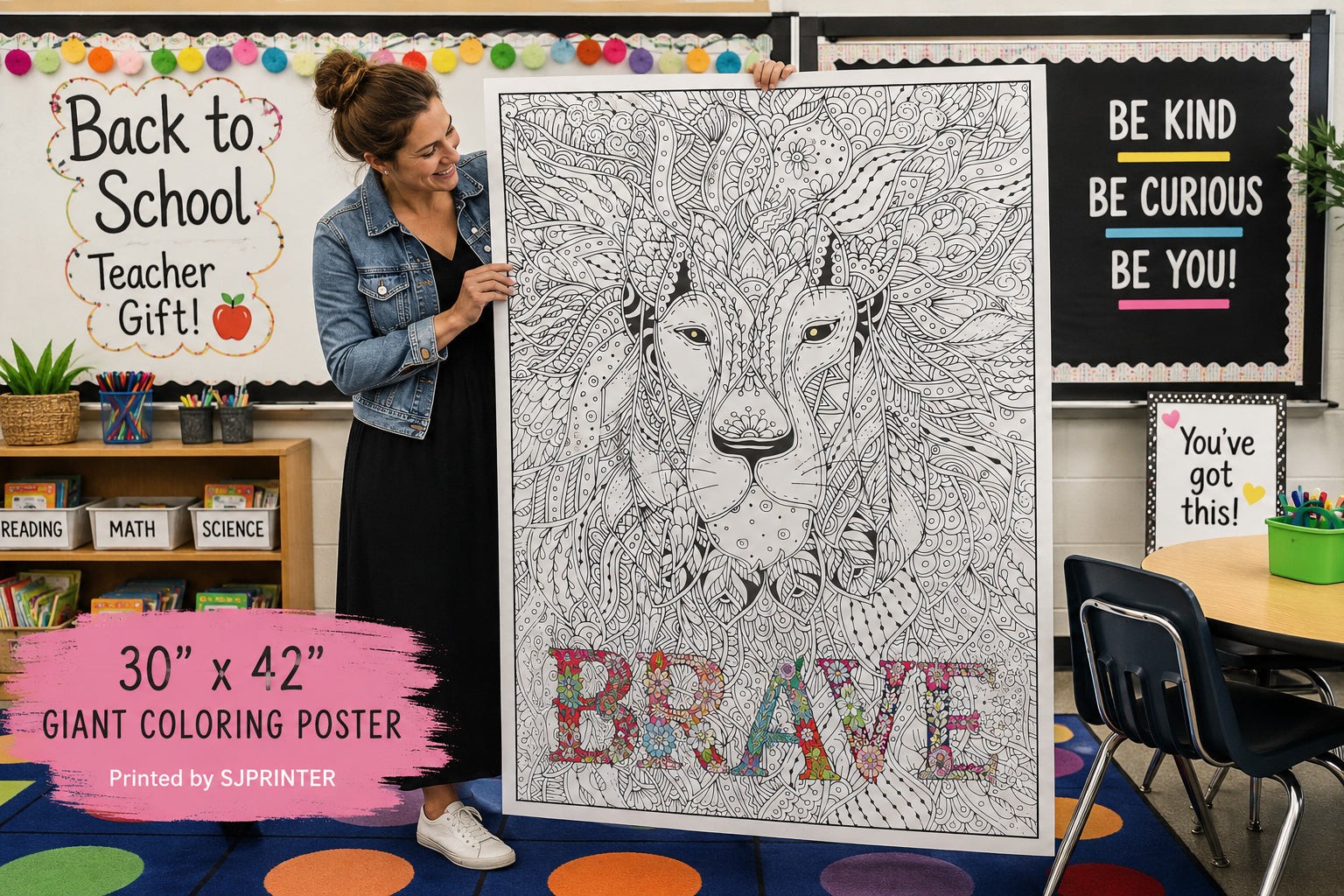
A giant coloring poster at 30x42 inches changes this completely.
Larger coloring sections mean kids can use full-arm strokes, broader movement that engages the shoulder and arm, not just the fingers. More proprioceptive input. More calming effect. And because the scale is so different from a standard page, kids who have tuned out regular coloring books often engage with giant posters in a way that surprises their parents.
OTs call it the "just-right challenge" — enough sensory input to be engaging, not so much that it overwhelms. A 30x42-inch poster with bold lines and large sections hits that mark for a wide range of ages and sensory profiles.
Shop Giant Coloring Posters at SJPrinter →
Which Kids Benefit Most
Coloring as a sensory activity works across the board — but these groups tend to see the most noticeable results:
Kids with Sensory Processing Differences
Children who seek proprioceptive input (heavy work, crashing, pushing) often respond well to the deep pressure feedback of pressing markers firmly onto a large poster. It's a socially appropriate, contained way to get the input their nervous system is looking for.
Kids with ADHD
The combination of visual focus and repetitive hand movement gives the brain just enough sensory engagement to stay on task without requiring the kind of sustained attention that academic work demands. Many parents report coloring as one of the few activities their ADHD kids will sustain for 30+ minutes.
Anxious Kids
Anxiety lives in the thinking brain. Coloring occupies the thinking brain just enough to interrupt the worry loop — without requiring enough cognitive load to add stress. It's the same mechanism behind fidget tools, but with a finished product at the end.
Typical Developing Kids Who Just Need to Calm Down
You don't need a diagnosis for this to work. After a loud school day, a big social situation, or a meltdown, coloring is one of the fastest ways to bring a child's nervous system back to baseline. It works because of biology, not because of any particular skill level.
How to Use Coloring as an Intentional Sensory Activity
There's a difference between "here's something to do" and using coloring as an actual sensory regulation tool. Here's how to do the second one:
- Time it intentionally. After school is a high-regulation-need moment for most kids — the school day is a sensory marathon. Having a poster ready to go when they walk in the door gives their system a chance to decompress before homework, dinner, or any other demand.
- Let them choose their tools. Markers provide more proprioceptive feedback (more pressure needed) and tend to be more regulating. Colored pencils offer finer input and work better for kids who are already calm and want focused, precise work.
- Don't redirect color choices. The sensory benefit comes from the process, not the product. A purple sky and a green sun is a perfect result if the child's nervous system is more regulated when it's done.
- Use it before demanding tasks. Coloring before homework, before a challenging social situation, or before a medical appointment can prime the nervous system for what's coming. OTs call this "sensory preparation" and it's a standard clinical technique.
What to Buy (So You're Not Guessing)
For sensory regulation specifically, choose posters with:
- Large, clearly defined sections — less frustration, more flow
- Bold outlines — satisfying to stay within, not stressful if you don't
- Familiar imagery — animals, flowers, nature — easier to engage with when already dysregulated
One poster lasts weeks of after-school sessions when used this way. A bundle gives you enough variety to keep it fresh across a whole school term.
Browse Giant Coloring Poster Designs →
2-Poster Bundle — $50 with Free Shipping →
One More Thing Worth Knowing
Sensory play doesn't have to be complicated to be effective. The kinetic sand, the slime kits, the elaborate sensory bins — they work, but they also require setup, cleanup, and a surprisingly high tolerance for mess.
A giant coloring poster takes 30 seconds to set up, produces zero mess beyond a few marker lids left on the table, and ends with something your kid is proud to hang on the wall.
Sometimes the simplest sensory activity is the best one.
Read more: Activities for Kids That Actually Hold Their Attention →
Read more: How Teachers Are Using Coloring Posters as Brain Breaks →
Giant Coloring Posters as a Group Sensory Activity in OT Settings
Most coloring activities in OT are individual — one client, one page. A giant coloring poster changes that. When multiple clients work on the same oversized poster at once, each contributing to their own section, the session builds the same fine motor and sensory regulation benefits while adding a collaborative layer that individual pages cannot. Clients practice sharing space, negotiating color choices, and recognizing each other's work as part of a shared outcome — all without the session feeling like a social skills exercise. For OT practitioners running group sessions, it is one of the simplest format changes with the most immediate impact on group engagement. See our full guide to using giant coloring posters in therapeutic group settings.
Questions About Which Poster Works for Your Child?
Every child's sensory profile is different. If you want help choosing the right design or size for a specific need, we're happy to help.
Leave a comment
All comments are moderated before being published.
This site is protected by hCaptcha and the hCaptcha Privacy Policy and Terms of Service apply.